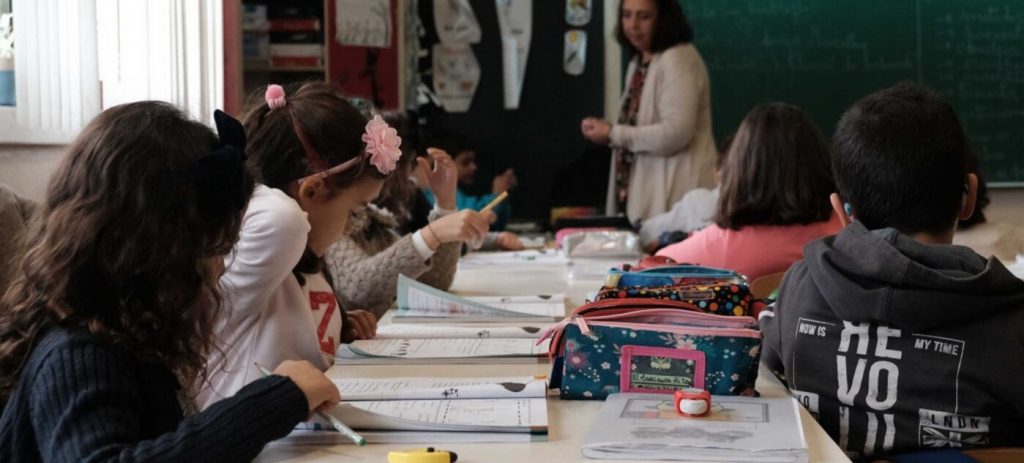
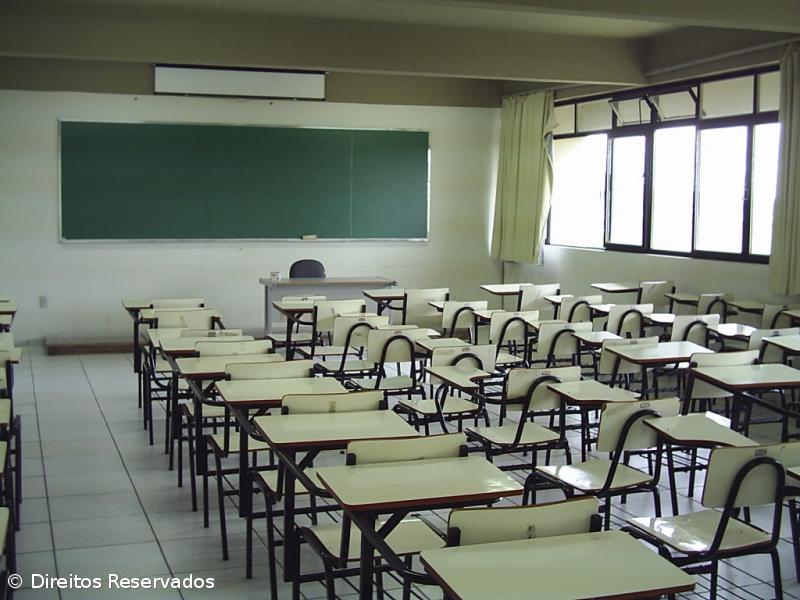
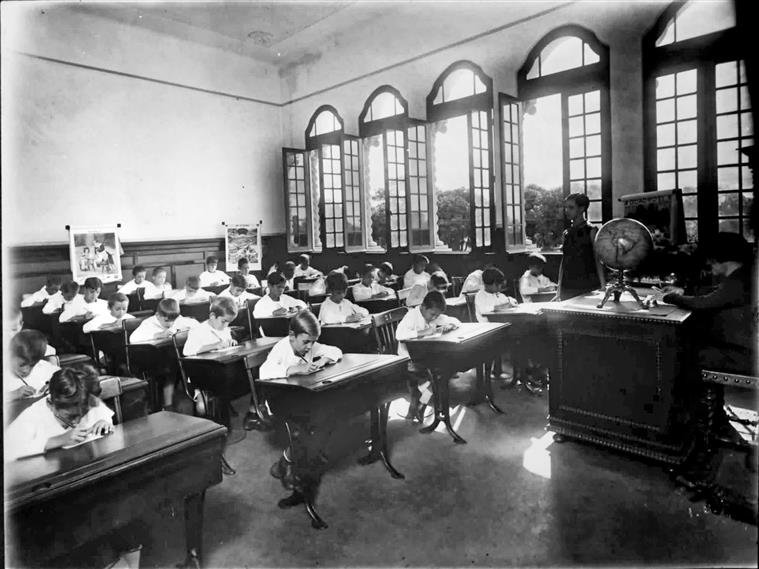
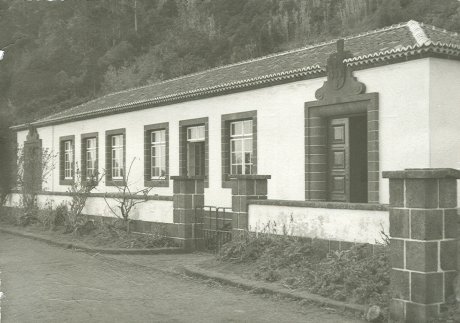
In the 19th century, school served entirely to learn to read, write, and count, that was the essentials. Rare were the schools where there were subjects dedicated to Grammar, History and Geography, Civility and other languages. The teaching of more basic notions and feminine skills, such as embroidery, sewing, and stockings, were also valued.
Most schools in the Azores had only one teacher, who taught through “mutual teaching” – which consisted in the more advanced students collaborating in the teaching of the beginners – and “simultaneous teaching” – in which the teacher taught the whole class. However, teaching conditions were not the best, from the infrastructure and lack of school materials to the poor preparation of most teachers. Many students, despite being enrolled in school, did not mean they attended or completed school, which contributed to the significant increase in illiteracy rates on the islands. This was a problem that lasted for many years, including during the Estado Novo (New State)…
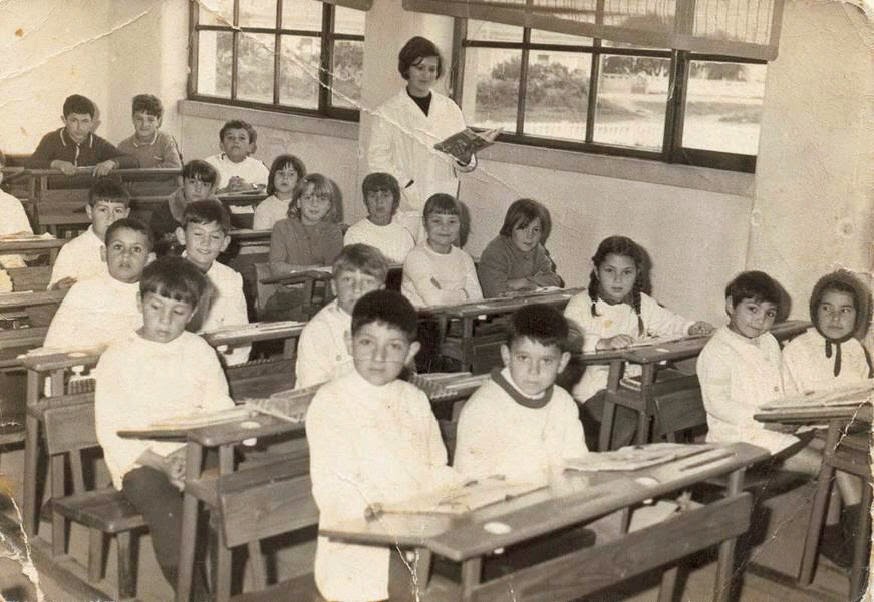
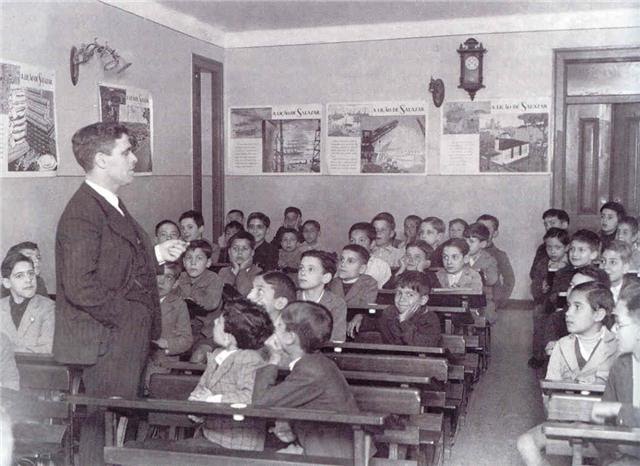
During the New State (1933-1974), known by many as the time of Salazar, teachers had another posture in the classrooms. The teacher was an authoritarian figure who demanded a lot of respect from the students! In order to obtain this respect it was usual to apply several punishments to the students, especially physical and violent punishments, such as being hit on the hands as well as kneeling on dry corn for long periods of time! Students received these punishments not only for misbehavior, but also for ignorance of what was being taught in class!
The classrooms were usually segregated, some for boys and others for girls, as well as there were also school uniforms and in the classrooms some symbols were common, such as the crucifix, due to the importance of religion for the country, as well as singing the national anthem and there was the presence of pictures of political leaders such as Oliveira Salazar and Américo Tomás, a bit like other European dictatorships, such as Mussolini’s and Hitler’s, in Italy and Germany respectively!