SÃO MIGUEL, STAGE OF MISCELLANEOUS EPISODES

30 de July, 2021

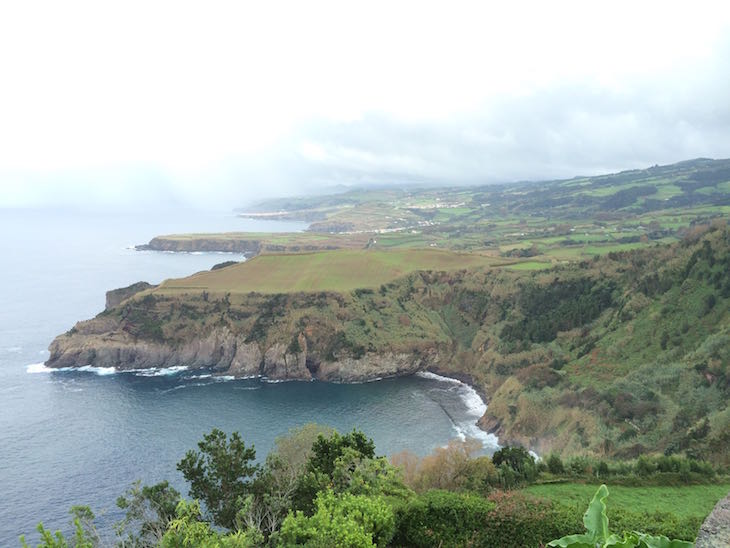
The island of São Miguel, also known as «green island», according to old European nautical charts from the 14th century, was discovered between 1427 and 1439 by Gonçalo Velho Cabral, a Portuguese navigator under the command of the great discoverer Infante D. Henrique. After being found, São Miguel became a unique captaincy with the island of Santa Maria, to contribute to a better administration of these islands, with Gonçalo Velho Cabral as its grantee.

São Miguel island
Statue in honor of Gonçalo Velho Cabral, in Ponta Delgada

Its settlement began in the 40’s of the 15th centuries, shortly after its discovery, with the current village of Povoação being the first to be populated and later the current Vila Franca do Campo, which attracted many settlers due to its lowland area. sea ​​shore. Its first settlers were noble men who sought opportunities for wealth, which would be possible through service to a powerful lord. Thus, the first settlers and lords of the island of São Miguel, who brought a lot of people to this island, came from the Alentejo regions of Portugal, as well as from the Algarve and Madeira, with some foreigners, especially French.

Povoação Town, the first town on the island to be populated
Portas do Povoamento, Povoação

Thanks to its geographical position and fertility, the island of São Miguel developed rapidly at an economic level, which was based on agriculture and pastoralism, these being one of the main activities that have prevailed over the centuries until today. From the eight hundredth, the economy provided good moments of prosperity to the island thanks to the export of oranges that allowed many contacts with the foreigner, initiating the cycle of the orange, which received enormous improvements with the intervention of important figures of the elite of São Miguel, José do Canto, who contributed to its expansion.

Farmer during milking, Santa Bárbara da Ribeira Grande, 1999
Gorreana Tea Plantations, Ribeira Grande
José do Canto, a figure in São Miguel's elite, driving force behind the orange and tea cultivation in the island

In the 16th century, the donataria that grouped the two eastern islands (Santa Maria and São Miguel) ceased to exist, with captaincies throughout the archipelago, in which São Miguel also became a separate captaincy of the island of Santa Maria, being its capital Vila Franca do Campo, which until 1522 concentrated all services and a larger number of populations. However, after that date (1522) the island of São Miguel suffered a violent earthquake that destroyed its capital, and from then on it was the nearest settlement, Ponta Delgada, which became the new capital.

City of Ponta Delgada

In the 17th century, the island of São Miguel already had a considerable position at the level of the country, and in the previous century it was the scene of the Naval Battle of Vila Franca, a battle fought during the period of Philippine rule between the French and the Spanish and Portuguese. After 1640, with the Restoration of Independence in Portugal, the island of São Miguel, after being the scene of war and battles, recovered its position as a commercial center, as well as its relations that increased with the outside, as the case of Brazil, where he sent many settlers.

In the 19th century, São Miguel returned to being a place of great importance, especially during the Portuguese Civil War (1828-34), where the battle of Ladeira da Velha, in the northern part of the island, took place between the Miguelist and Liberal troops, from where the liberals come out victorious. Within this episode of Portuguese history, D. Pedro IV, liberal, emperor of Brazil and once king of Portugal who defended the kingdom in favor of his daughter Maria da Glória, prepared an army to fight against the absolutists, which embarked with destiny to Mindelo, departing from Calheta Pêro de Teive, in Ponta Delgada.

Ladeira da Velha, Ribeira Grande
Calheta Pêro de Teive, Ponta Delgada

In a more recent context, it is important to mention the importance of the island of São Miguel during the First Great World, especially the bombing event to which Ponta Delgada was subjected to a German submarine that was moored at the dock, which was repelled by the piece of artillery that was at the top of the Mother of God. After this scare, an American naval base was installed in Ponta Delgada during the war.

Currently, São Miguel is the Azorean Island with more population and a political-administrative center with greater dynamics, with various services and headquarters of the Regional Government of the Azores.

Dock of Ponta Delgada during the First World War
Chapel of the Mother of God, Ponta Delgada

Last modified: 4 de August, 2021

Comments are closed.