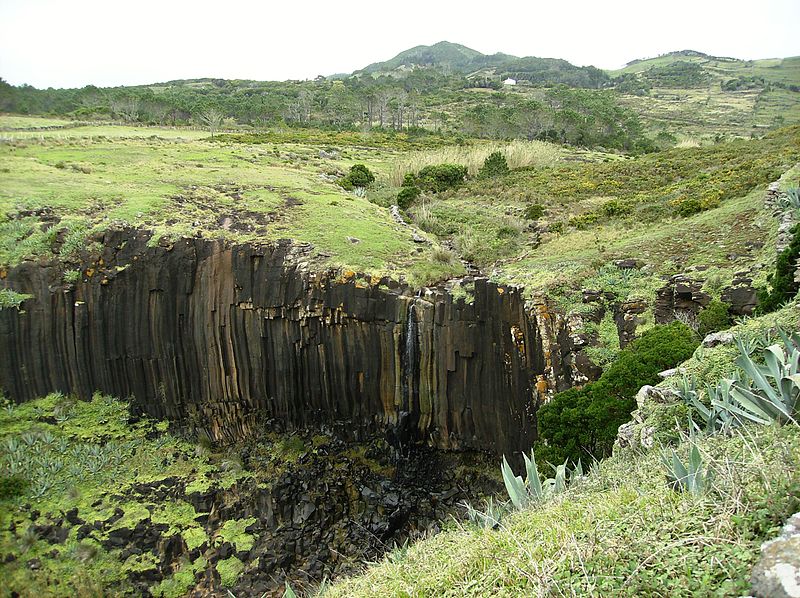
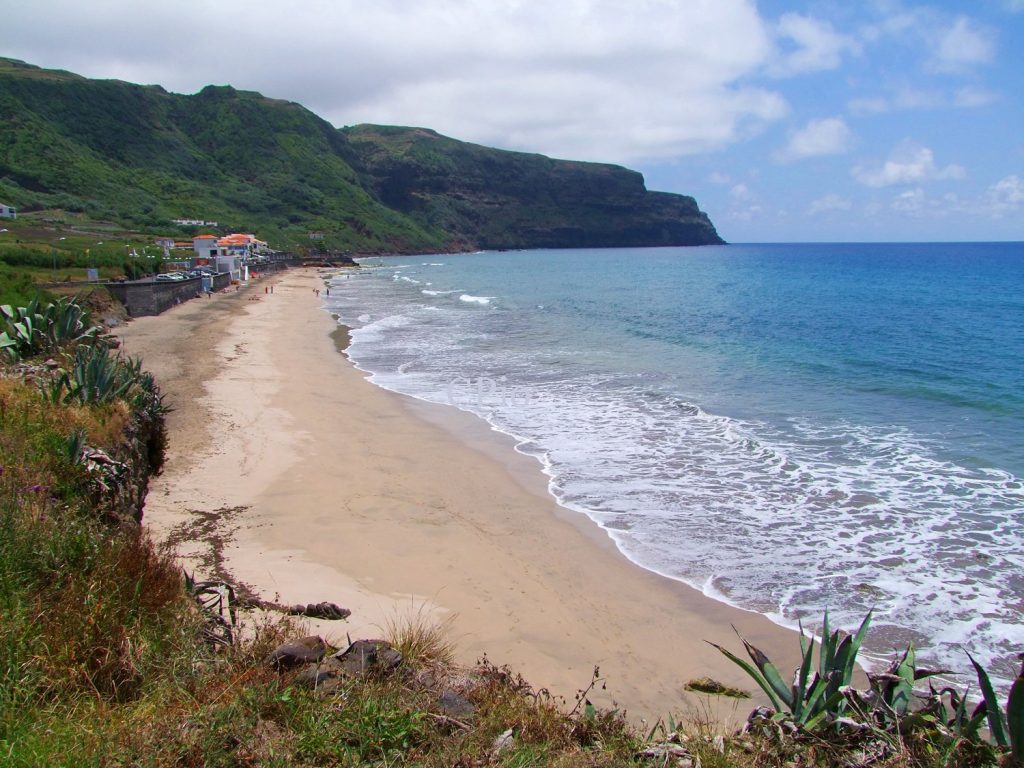
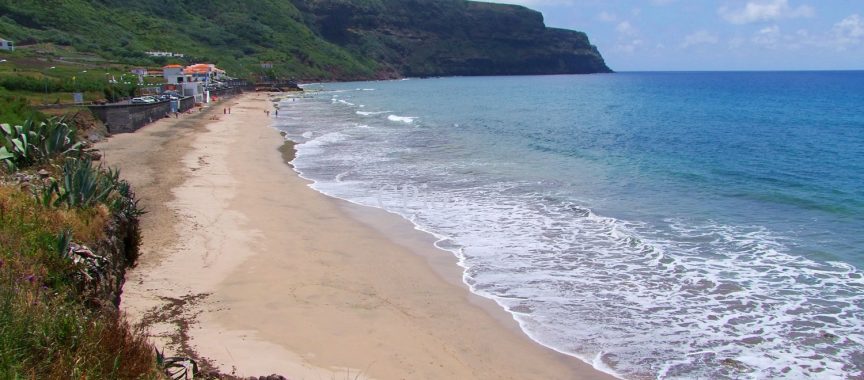
The reason this is also known as the yellow island, is due to the colors that predominate in its passages, composed by the green of the pastures and above all by the yellow tones of the harvests and of its unique beaches, of white and not black sand as in the other islands. Santa Maria has a rugged relief, the highest point being Pico Alto, 590m high. In turn, the coast of the island is steep, being demarcated by some bays that formed beaches, as happened with the Bay of São Lourenço.
Unlike the other islands, this one has a drier and sunny climate, which allows it to give a distinctly Mediterranean character, providing hotter and drier summers. In this way, Santa Maria is a popular destination for holidays, having as its main attractive point its beautiful beaches, such as Praia Formosa.